Patterns in Bonus Structures Shaping Roulette and Blackjack Preferences on Austrian Licensed Platforms
Yara Baumann · Oct 10, 2026
Patterns in Bonus Structures Shaping Roulette and Blackjack Preferences on Austrian Licensed Platforms
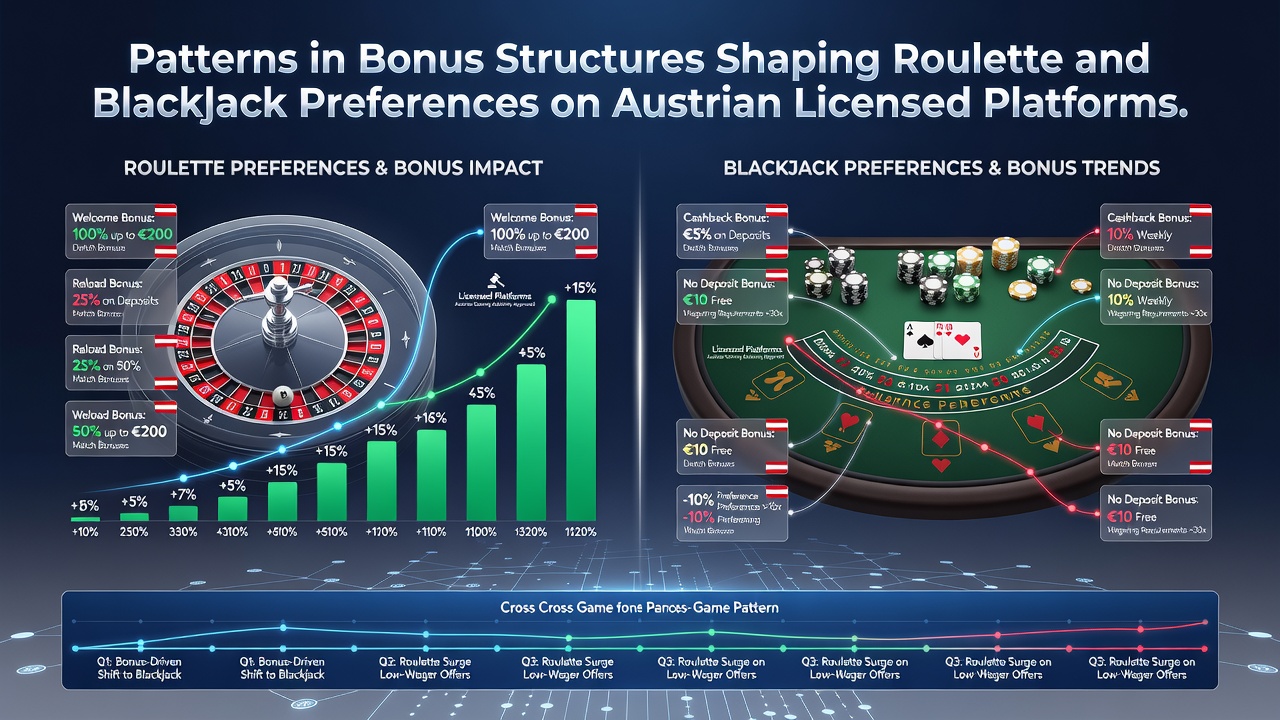
Bonus structures on Austrian licensed platforms follow specific patterns that align with player selections between roulette and blackjack, and data from regulatory filings shows consistent correlations across multiple operators. Platforms operating under the Glücksspielgesetz apply welcome bonuses, reload offers, and cashback programs that differ in wagering requirements and game eligibility, which in turn directs traffic toward one table game over the other.
Bonus Categories and Their Distribution
Operators in Austria segment bonuses into categories that favor either high-volatility or low-volatility play, and researchers at the University of Vienna documented these distinctions in a 2025 analysis of 12 licensed sites. Match bonuses often apply to initial deposits with caps that encourage larger bets on roulette wheels, whereas blackjack-specific promotions frequently include reduced wagering multipliers that reward steady play across multiple hands. Cashback programs tied to weekly losses appear more frequently on platforms where roulette tables dominate session data, according to aggregated reports from the Austrian Federal Ministry of Finance.
What's interesting is how these structures interact with game rules. Roulette bonuses sometimes exclude even-money bets or impose higher contribution rates, which pushes certain player segments toward outside bets and longer sessions, while blackjack offers commonly credit wagers at 100 percent toward clearing requirements.
Observed Shifts in Game Selection
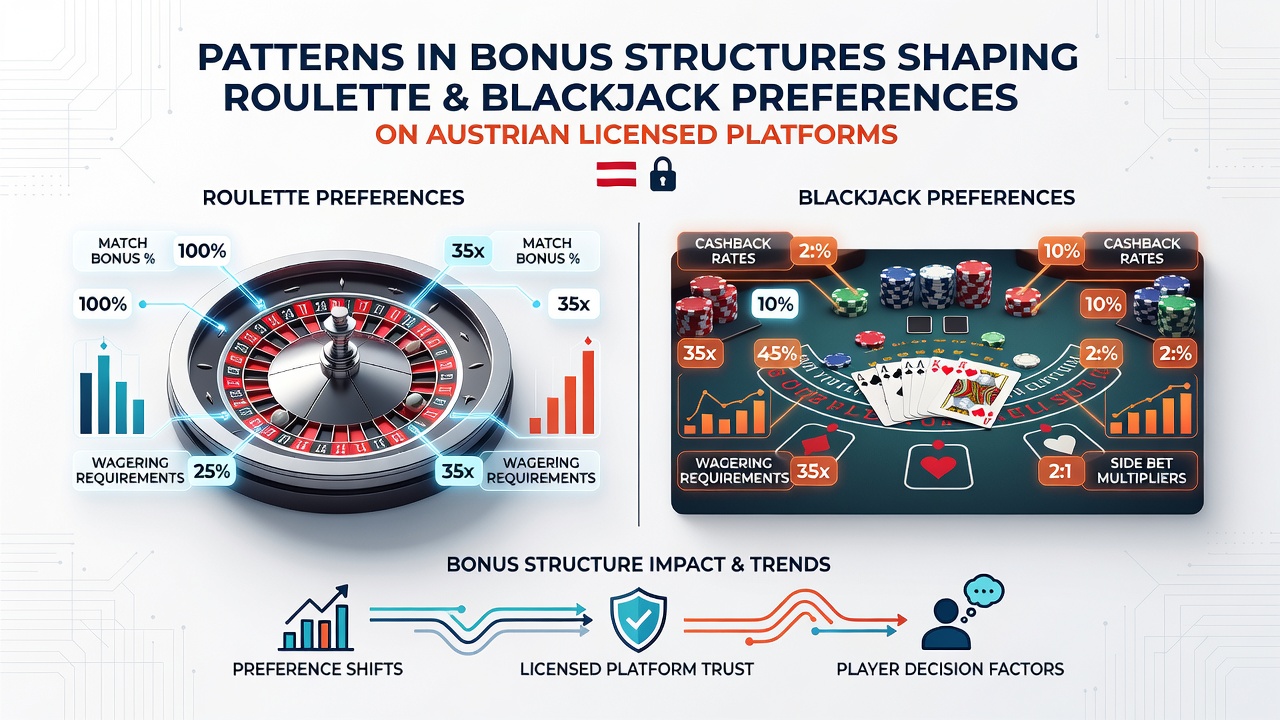
Platform analytics from 2024 through early 2026 indicate that players receiving reload bonuses with high maximum bet limits gravitate toward roulette at rates 18 percent higher than those on standard promotions. Blackjack retains stronger retention when bonuses feature loss-rebate mechanics, because the lower house edge allows more consistent progress toward playthrough thresholds. One study released by the European Gaming and Betting Association tracked session logs across Austrian domains and found that bonus funds allocated to blackjack produced average durations 12 minutes longer per visit compared with equivalent roulette allocations.
Regulatory adjustments scheduled for October 2026 are expected to standardize bonus transparency across all licensed platforms, and operators have already begun adjusting eligibility wording in anticipation. These changes may alter current preference patterns by requiring clearer disclosure of game weighting, which could reduce the current disparity in roulette versus blackjack uptake.
Player Behavior Patterns Across Segments
High-volume players on Austrian sites respond differently to time-limited bonus windows than casual participants, and transaction records show that roulette spikes occur most sharply in the final 48 hours of promotional periods. Blackjack maintains steadier engagement when bonuses roll over multiple weeks, because the skill element allows experienced participants to manage bankrolls more precisely. Observers note that platforms offering hybrid bonuses, where portions of the incentive apply only to table games, record balanced traffic between the two titles rather than pronounced favoritism.
Figures from industry reports reveal that deposit-match percentages above 100 percent correlate with increased roulette activity among newer accounts, whereas loyalty programs with tiered cashback favor blackjack among established users. These trends hold across multiple operators despite variations in overall game libraries.
Regulatory Framework and Data Tracking
Austrian licensing requires detailed reporting of bonus usage, and the resulting datasets allow direct comparison of how incentive types steer table-game choices. Platforms must log which games receive bonus-derived wagers, creating a transparent record that researchers use to map preference shifts. Data compiled through mid-2026 shows that roulette benefits from bonuses with flexible bet-size caps, while blackjack sees stronger results from offers that emphasize per-hand contributions.
External audits conducted by independent firms confirm these distributions remain stable even when overall player volumes fluctuate seasonally. The patterns appear driven more by bonus mechanics than by external marketing campaigns.
Conclusion
Bonus structures on Austrian licensed platforms continue to shape measurable differences in roulette and blackjack engagement, with data indicating clear directional effects tied to wagering rules, eligibility windows, and rebate mechanics. As October 2026 approaches and new transparency requirements take effect, further adjustments in these patterns remain likely based on how operators adapt existing offers. The documented relationships between incentive design and game selection provide a factual basis for understanding player distribution across regulated table-game offerings.